How it worksTechnologyClinical dataProductsCompanyGet updates

D-Pocket

Blood glucose measured through the skin with infrared light. No needle, no test strip, no drop of blood.

In development in Berlin. Clinical results published.

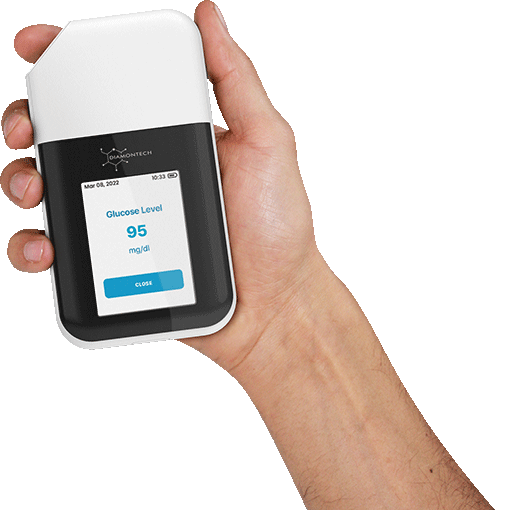
Follow the development The D-Pocket held in a hand, showing a glucose level of 95 mg/dl on its screen
  1. Step 1 of 5

    Rest a fingertip on the sensor

    The D-Pocket is the size of a smartphone. A measurement starts much like unlocking a phone with your fingerprint.

  2. Step 2 of 5

    An infrared pulse enters the skin

    A quantum cascade laser sends short mid-infrared pulses at the wavelength glucose absorbs. The light is safe for skin and eyes.

  3. Step 3 of 5

    Glucose turns the light into heat

    Glucose in the tissue fluid absorbs the pulse and warms the skin very slightly, far too little to feel. The wavelength is chosen so the signal comes from glucose.

  4. Step 4 of 5

    A second beam measures the warmth

    A red probe laser reflects off the crystal under your finger. The heat bends it by a hair and a position-sensitive detector registers it. This is photothermal detection.

  5. Step 5 of 5

    Your value in about 10 to 15 seconds

    The device converts the signal into a blood glucose reading on its display. Painless, and without a lancet.
Why it mattersLife with diabetes

More than 589 million people live with diabetes. Most still check their glucose by pricking a finger or by wearing a sensor under the skin. Our founders have spent over 15 years on a different route: reading glucose with light, without breaking the skin.

Pain-free

No lancet and no needle. The light pulse is too gentle to feel.

Easy to use

Finger on the crystal, keep still, read the value. Nothing to change, nothing to stick on.

Accurate

Clinical data shows accuracy in the range of the first approved invasive CGM systems.

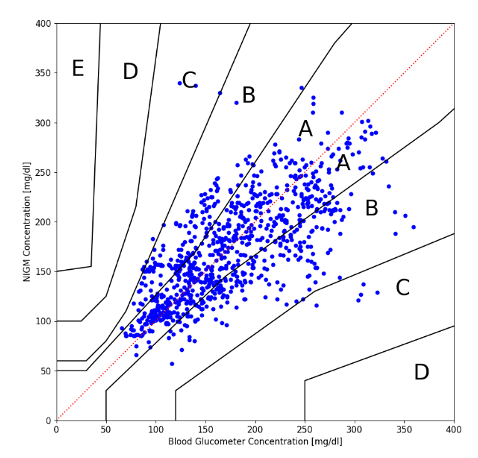
Error grid plot: non-invasive glucose readings against a blood glucometer, most points inside zones A and B
Error grid published by DiaMonTech: non-invasive readings (vertical) against a reference blood glucometer (horizontal).

Accuracy in the range of early invasive CGMs

20.7 %MARD, measurement A
19.6 %MARD, measurement B

In DiaMonTech's latest clinical study the non-invasive system reached MARD values comparable to early CGM devices approved by the FDA and EU notified bodies. It is the first time a non-invasive device has shown this in a real-life comparable setting.

Read about the study

Who we build it for

“I'm looking forward to the day when our kids don't have to prick their fingers anymore. Just the clicking sound of the lancet makes me uncomfortable.”

Dorothea, parent, Cologne

Thorsten LubinskiThorsten LubinskiCEO and co-founder
Prof. Dr. Werner MänteleProf. Dr. Werner MänteleCSO, inventor of the method

Physics from Frankfurt, engineering in Berlin

Werner Mäntele and his team at Goethe University Frankfurt researched photothermal detection for more than 15 years. DiaMonTech turns it into a certified medical product, with ISO 13485 quality management and devices manufactured locally in Germany.

In 2025 the company raised 8 million euros, led by Companisto with Samsung Next taking part, and it is selected for the EIC Accelerator 2026.

Team and investors

Be the first to hear when the D‑Pocket is ready

People with diabetes

Development news, study results and launch dates, a few times a year.

Investors

Securities information, general meeting and IPO questions.

ir@diamontech.de

Press

Images, interviews and background on the technology.

news@diamontech.de